Showing posts with label Barack Obama. Show all posts

September 29, 2017

Political Report # 1279 Obama's Guantánamo Legacy Lingers in Trump Era


By By Aisha Maniar, Truthout 


While President Trump has quickly developed a more violent record than Obama on drone warfare, immigration and other policy areas, Trump has thus far not embraced Guantánamo and made it his own the way that Obama did in 2009.
The 41 prisoners who remained at the Guantánamo Bay prison camp when Obama left office continue to be the only prisoners in the camp, and the arbitrary regime continues almost entirely as it did under Obama. Trump's odd tweets about Guantánamo, such as his tweet about the alleged recidivism rate of former prisoners, are about as meaningful and effective as his tweets about covfefe and the country needing to "heel."
Many of the 197 men released from Guantánamo by the Obama administration continue to suffer the repercussions of their imprisonment every day. More than two-thirds of releases under Obama were of men resettled in third countries. Most were effectively rendered refugees who could not return to their country of origin, either due to the safety risk that resulted from their association with Guantánamo or due to the United States' foreign policy of war and hostility in states such as Yemen and Syria.
The problems for prisoners transferred to third countries where they had no friends, family, job or connections, and often could not speak the local language, started almost immediately. Coupled with intrusive surveillance and restrictions, freedom remained elusive.


December 26, 2016

Political Report # 1211 Obama keeps on deporting Central American teens. What will Trump do?


rotesters hold signs as they march in opposition to the election of President-elect Donald Trump on Sunday, Nov. 13, 2016, in St. Louis. AP Photo/Jeff Roberson. All rights reserved.


By Donica Jorden, openDemocracy


The blueprint established under the Obama administration to deport Central American teenagers soon after they reach the age of majority continues to operate unabated. Despite the intercession of public officials and a pending appeal in Federal Immigration Court, North Carolina teenager Pedro Arturo Salmerón was deported from the United States to El Salvador on Saturday, November 12, just days after Donald Trump was elected president.
The deportation marks the continuation of a policy begun last year under the Obama government to respond to an unprecedented number of minors and mothers with small children who arrived at the US/Mexican border from the northern Central American countries of El Salvador, Guatemala and Honduras during the summer of 2014. In the wake of an escalation in violence that rendered those countries the most dangerous places on earth and set off the mass migration, the US Department of Homeland Security (DHS) issued a directive in December 2015 taking aim at the young and vulnerable asylum seekers as soon as they aged out of protected status.
Though DHS and President Obama insisted that they were only targeting dangerous criminals for arrest and deportation, in reality the opposite seems to be true. It appears that innocent applicants for asylum and relief, who are easily identifiable and located as they faithfully offer all their personal information, are at the highest risk.
Then 17, Pedro fled El Salvador to rejoin his family in Charlotte, NC in June 2014, following the brutal murder and decapitation of his cousin by gang members. The gang, his family says, was also threatening his life.
But his time with mother Carmen and other family members was abruptly cut short. Pedro immediately applied for humanitarian asylum and the opportunity to live with his family in North Carolina upon arriving in the United States, and the family tirelessly pursued his case, spending thousands of dollars. The Vance High School student was arrested by ICE (Immigration and Customs Enforcement, the police arm of the DHS) agents on his way to school on January 26, 2016.
Able to play several instruments and with dreams of a career in music, Pedro also excelled in sciences and literature at Vance. After his arrest, he was mainly held for the last 10 months at Stewart Detention Center in Lumpkin, Georgia, 400 miles (640 km) from his family and supporters in North Carolina, in an atmosphere he described as one of "disappointment and despair."
The slight and soft-spoken youth, who wears his hair in long, glossy curls down his back, was first slated to be transported to Houston, Texas, on Saturday when the plane he was to take was deemed unable to fly. This was the third time that Pedro and his family had to endure a false start to removal proceedings. At 1 am on July 31, he was moved out of Stewart for imminent deportation, only to be returned to Georgia the next day. The same thing had happened twice earlier that week. Pedro's lawyer said he believed that it was "in retaliation" for having lodged a complaint about a previous move to a facility in Louisiana.
Congresswoman Alma S. Adams, representing the 12th congressional district in North Carolina, has been speaking out and supporting Pedro and the Salmeron family all year, including travelling to Stewart to see him. Pedro also was counting on the support of three other congresspersons, Representatives John Lewis (D-GA), Hank Johnson (D-GA), and G.K. Butterfield (D-NC), who with Adams wrote a letter to DHS director Jeh Johnson requesting a "humane solution" for the youthful immigrants.
But attitudes to these young immigrants do not fall strictly along party lines.
Kay Hagen, Democratic Party senator who represented North Carolina in Washington DC from 2009-2015, was vehemently opposed to the DREAM Act (Development, Relief and Education for Alien Minors ).  "Dreamers" are undocumented students who were born in other countries but raised and educated in the United States, and the act allows them to continue their studies in the US In 2010, Hagen was one of only five Democratic senators who opposed the act.
Meanwhile, across the aisle, Lindsay Graham, the Republican senator from South Carolina, is currently working on legislation with Senator Jeff Flake (R-Arizona) to extend President Obama's 2012 initiative known as DACA (Deferred Action for Childhood Arrivals). Under DACA, DHS is supposed to refrain from deporting undocumented persons who came to the United States as children, were educated here, and have no criminal histories. These undocumented immigrants are then granted temporary visas to live and work, which must be renewed every two years.
The files of 750,000 DACA applicants and a million DREAMers may prove too tempting for President-Elect Donald Trump, who vociferously declared his intention to deport millions of undocumented immigrants on many occasions during his campaign. After years of scapegoating immigrants and convincing his followers, if not a large part of the American public, that immigrants are "rapists and murderers," it would be easy to demonize the entire immigrant population in order to justify refugee and student deportations and more easily achieve his promised numbers.
Bring it on, declares immigrant advocate Viridiana Martínez, one of the founders of NC Dream Team and Alerta Migratoria NC. "Obama told us the right things, but he did the wrong ones," Martinez said. But under Trump, "I am glad the cards are now on the table and there is not a hidden agenda. Because then we can fight accordingly."


Original article and sources can be found here:
https://www.opendemocracy.net/democraciaabierta/danica-jorden/obama-keeps-on-deporting-central-american-teens-what-will-trump-do

December 7, 2016

Political Report # 1205 Does Henry Kissinger Have a Conscience?


By Jon Lee Anderson, The New Yorker


Last March, when President Obama travelled to Argentina to meet with the country's new President, Mauricio Macri, his public appearances were dogged by protesters who noisily demanded explanations, and apologies, for U.S. policies, past and present. There are few countries in the West where anti-Americanism is as vociferously expressed as in Argentina, where a highly politicized culture of grievance has evolved in which many of the country's problems are blamed on the United States. On the left, especially, there is lingering resentment over the support extended by the U.S. government to Argentina's right-wing military, which seized power in March of 1976 and launched a "Dirty War" against leftists that took thousands of lives over the following seven years.
Obama's visit coincided with the fortieth anniversary of the coup. He pointedly paid homage to the Dirty War's victims by visiting a shrine built in their honor on the outskirts of Buenos Aires. In an address he gave at the shrine, Obama acknowledged what he characterized as American sins of omission, but he stopped short of issuing an outright apology. "Democracies have to have the courage to acknowledge when we don't live up to the ideals that we stand for," he said. "And we've been slow to speak out for human rights, and that was the case here."

November 23, 2016

Political Report # 1201 "Obama Built the Structures for Trump": A Terrifying Legacy of Mass Deportation


Jose Juan Moreno sits in the room at the University Church on Chicago's Southside where he has sought sanctuary from Immigration and Customs Enforcement (ICE) since April. (Photo: Hoda Katebi)


By Alex Shams, Truthout


For the last six months, Jose Juan Moreno has been confined to a small room above the University Church on Chicago's South Side. Safe inside, he cannot venture more than 50 steps from the corner where he sleeps. If he goes beyond that, US authorities have promised to deport him from the country.
Although he has lived 17 years in Chicago -- the only home any of his five American-born children have ever known -- Moreno originally crossed the border from Mexico without papers. Under US law, that means he is subject to arrest and deportation at any time, a status he shares with 11 million people in the United States considered "undocumented."
Earlier this year, Moreno received a deportation order from Immigration and Customs Enforcement (ICE), the authority that carries out the raids and arrests that represent the strong arm of national immigration policy. He was told to leave by April 15, otherwise he'd be deported.
In response, Moreno did the only thing he could think of -- he sought sanctuary in the church, praying that even if the authorities would not respect his family or his long years of work in the US, at least they might respect the sanctity of a holy place.
So far, they have. But for how much longer is anybody's guess.

October 31, 2016

Political Report # 1193 'I'm No Threat' - Will Obama Pardon One of the World's Longest-Serving Political Prisoners?


Protesters call for Oscar López Rivera’s release at the White House on 9 October. Photograph: Manuel Balce Ceneta/AP


By Ed Pilkington, Guardian UK


Oscar López Rivera - AKA the Mandela of Puerto Rico - has been in a US jail for 35 years for his part in the independence struggle. He talks about renouncing violence and his dream of seeing the monarch butterfly again
ny day now, monarch butterflies will begin their epic migration from Canada to Mexico. It is one of the wonders of the world: insects whose distinctive orange and black wings barely stretch four inches flying on thermal currents up to 3,000 miles in search of a warm spot to spend the winter.
The phenomenon has entranced Oscar López Rivera since his childhood days in rural Puerto Rico. If he ever gets the chance, he says, one of his great ambitions is to trace the monarchs' route, all the way from the Canadian border, across the US great plains into northern Mexico. "The monarch is fascinating to me," he says. "The length of their journey and what they do to survive: how can an insect so small go so far?"
That's an achingly powerful question when you consider who is posing it. For the past 35 years, López Rivera has been unable to fly, his wings clipped. He has been held in federal institutions, for 12 of those years totally alone inside a 6ft-by-9ft concrete box from which he had no view of the sky. The last time he saw a live butterfly, let alone a monarch, was in 1981.

October 14, 2016

Political Report # 1189 Obama Appoints Social Security Critic to Fix Puerto Rico’s Budget


By David Dayen, The Intercept


Andrew Biggs, an American Enterprise Institute resident scholar and architect of conservative efforts to cut and privatize Social Security, has been named by President Obama to a seven-member fiscal oversight board for the debt-ridden U.S. territory of Puerto Rico. That board, which will work out restructuring for over $70 billion in debt, has widespread authority to institute additional austerity on the island’s citizens, including potential reductions in public pensions. And Biggs appears to be the only member of the board that has significant experience with social insurance.
Under the Puerto Rico Oversight, Management, and Economic Stability Act signed into law in June, the fiscal oversight board will be effectively in charge of the island’s finances, usurping its democratically elected government. The oversight board is tasked with balancing Puerto Rico’s budget and pursuing all avenues to pay off its massive debt, including cuts to the island’s education, police, and health care systems. It can sell off Puerto Rican assets, lower the island’s minimum wage, order layoffs, and enforce a ban on public employee strikes. Only as a last resort can the island obtain court approval for a debt restructuring agreement, and negotiate with creditors, which include several “vulture funds” that scooped up Puerto Rican debt at a discount in the hopes of a big payday.

May 17, 2016

Political Report # 1143 Obama's Victory Dance in Argentina By Michael Corcoran, Truthout

President Obama and Argentine President Mauricio Macri visit the Parque de la Memoria to honor victim's of Argentina's dirty war, in Buenos Aires, Argentina, March 24, 2016. 
(Stephen Crowley / The New York Times)


By Michael Corcoran, Truthout


US President Barack Obama recently went to Argentina to welcome its newly elected right-wing president, Mauricio Macri. Obama appeared to be in a celebratory mood -- while he was there he danced the tango. It made for a nice photo op. Media outlets in the United States loved the image, and praised "Argentina's reemergence" as a chance for the country to "rejoin the Western world."
While in Argentina, Obama was effusive in his praise of Macri; the two stood together touting this new alliance and the prospects for new trade deals and security agreements. Macri is replacing the populist, Bolivarian-style leader, Cristina Kirchner. This change instantly turns Argentina from one of the United States' most important foes in the region into an important ally. Obama must have been well aware that Macri, despite having been in power for just 114 days, has relentlessly engaged in what the Guardian described as a "rapid succession of controversial presidential decrees."
Macri's unsettling record includes gutting a historic media law protecting against monopolies, drawing the ire of Pope Francis by arresting the prominent human rights activist Milagro Sala, sneaking through Supreme Court justices and giving himself broad new powers by declaring a state of emergency. All of this was done within the first 100 days of his presidency, while the opposition-led Congress was away on recess. Still, Obama showered Macri with praise for his "contributions to the defense of human rights in the region."

December 21, 2015

Political Report #1100, 7,000 Honduran Child Migrants Deported From US and Mexico By TeleSur


Children join a protest to call on Obama to protect undocumented children. (photo: AFP)


Political Report #1100


By TeleSur
Mexico's role in deporting Central American migrants has been rapidly expanding.

Immigration authorities in the U.S. and Mexico deported a total of 6,986 underage Honduran migrants in the first 11 months of this year, as the number of unaccompanied minors apprehended on the U.S.-Mexico border continues to soar.

August 21, 2015

Political Report # 1069 Inside the Crazy Back-Channel Negotiations That Revolutionized Our Relationship With Cuba By Peter Kornbluh and William LeoGrande, Mother Jonas


Raúl Castro meets with President Obama on the sidelines of the 7th Summit of the Americas in Panama City, Panama in April, 2015. Estudio Revolucion/Xinhua/ZUMA


By Peter Kornbluh and William LeoGrande, 

Mother Jonas
How wild did things get? Secret missives, the pope, and artificial insemination wild.

On a rainy day last December, President Barack Obama gathered a small group of senior officials in the Oval Office and placed a telephone call [1] to Raúl Castro. Sitting on a couch to Obama's left were National Security Council aides Benjamin Rhodes and Ricardo Zuniga, personal emissaries whose 18 months of secret negotiations [2] were about to culminate in the first [3] substantive conversation between the presidents of the United States and Cuba in more than half a century.

August 6, 2015

Political Report # 1066 TThe Making of Leopoldo López


                  By Roberto Lovato, Foreign Policy
 
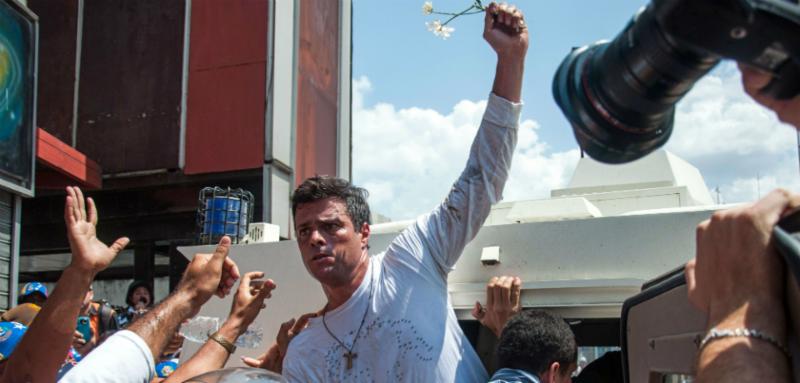
In the nearly year and a half since street protests rocked Caracas, the U.S. press has been kind to Leopoldo López, the 44-year-old jailed leader of Venezuela's radical opposition. He has been painted as a combination of Nelson Mandela, Gandhi, and his distant grand uncle, Simón Bolívar, for his magnetic brand of in-your-face politics. Newsweek wrote of his "twinkling chocolate-colored eyes and high cheekbones" and called López a "revolutionary who has it all." The New York Times published a photo of him, jaw out, fist in the air, in front of a crowd of screaming protesters and gave him a platform on its op-ed page. In New York, when the United Nations met last September, protestors rallied to show support for López, and President Barack Obama listed him among a group of political prisoners from repressive countries such as China and Egypt who "deserve to be free." López, who has done interviews shirtless, came to embody freedom and democracy for audiences across the globe, with stars from Kevin Spacey to Cher rallying to his cause, while the hashtag #freeleopoldo rocketed across Twitter.

 
But in Venezuela the picture is far more complicated. López has been in jail since February 2014 on charges of arson, public incitement, and conspiracy related to the first big anti-government protest that year, on Feb. 12, 2014, which left three protesters dead and kicked off weeks of rallies, street blockades, vandalism, and violence. The charges against him, which Amnesty International has called "politically motivated," could carry a prison sentence of 10 years. Outside the courtroom, the public debate continues to swirl between those who believe López is a freedom fighter facing trumped-up charges and those who believe he is the violent "fascista" the government of President Nicolás Maduro claims.

August 5, 2015

Political Report # 1065 The Roots of Puerto Rico's Debt Crisis-and Why Austerity Will Not Solve It


                            By Ed Morales, The Nation
 
Riding through the hills of Canóvanas last weekend with Prima, a vacationing 65-year-old Brooklynite who was born and raised in the Puerto Rican countryside, I got a brief lesson on the island's history and political economy. "This land was all cañaverales," she said, meaning rough acres of sugarcane, which has now been replaced by mile after mile of suburban tract housing. "When that ended, some people worked in factories and construction. Now, I don't know what's going to happen. I think the empire is collapsing."

Today that history has caught up with the island. Puerto Rico-an unincorporated territory of the United States with 3.5 million US citizen residents who do not have the right to vote for president or representation in Congress-is making headlines these days because of its inability to pay a $72 billion debt owed to holders of its devalued bonds, often issued through such entities as the infamous PREPA, the electrical power authority. The threat of default was signaled by Governor Alejandro García Padilla's admission last week to The New York Times that the debt was "not payable."

July 31, 2015

Political Report # 1064 by LAP Editor James Petras - The Right-Left Crossfire and the Post Neo-Liberal Left


                                               By James Petras, LAP Editor

Introduction

            The post neo-liberal regimes which flourished in five Latin American countries in the first decade of the 21st century were a product of three inter-related historical processes.  The breakdown of the neo-liberal development model, which in turn ignited mass popular movements for radical political-economic transformations; the incapacity of the mass movements to produce a viable alternative worker-peasant based regime; the beginning of a decade long mega commodity boom which provided a huge influx of revenues which allowed the center-left regimes to finance a capitalist recovery, and secure support from the extractive capitalist sector and finance generous increases in wages, salaries and pensions.
            These hybrid, extractive capitalist-national-populist regimes were repeatedly elected until the middle of the second decade of the 21st century.  The capitalist-populist electoral coalition encountered major opposition with the end of the commodity boom.  The fall in world-market prices led to demands by the techno-capitalist elites for measures of fiscal constraints aimed at reducing social expenditures.  At the same time they insisted the regimes grant fiscal largesse for the agro-mineral elite by lowering capital gains taxes and increase fiscal incentives for investors.
            As a result, the end of the commodity boom led to the termination of the center-left brokered "consensus".  In its place the regimes faced a right-left crossfire:  rightwing business associations led successful electoral challenges and large scale street mobilizations, and the left-wing trade unions and social movements resisted through strikes in defense of existing social gains.  The question raised by this left-right crossfire is whether this spells the end of the post neo-liberal, hybrid regimes and the return of neo-liberal regimes or class based leftist politics?

July 24, 2015

Political Report # 1061 How Cuba is using capitalism to save socialism By Tim Fernholz, Quartz


             A row of classic convertibles for rent in central Havana. 
         Quartz/Tim Fernholz


By Tim Fernholz, Quartz

HAVANA, CUBA-If you are fantasizing about your first trip to Cuba, that fantasy presumably includes cruising down the Malecón, Havana’s seaside promenade, in an open-topped 1957 Chevrolet Bel-Air, with the tropical light playing over the decrepit buildings and the warm sea breeze tickling your scalp. Cigars are probably involved, and rum.
The rum and cigars are produced by state-managed Cuban enterprises. But who is maintaining the classic cars? In many cases, not the Cuban government, but self-employed entrepreneurs.

Allowing limited private enterprise within its socialist economy was how Cuba weathered the collapse of the Soviet Union while still under the US embargo. And now that Cuba-US relations are warming, that nascent private sector is proving a surprisingly fertile common ground for the two governments-albeit for rather different motives.
For Havana, liberalization holds the promise of an economy strong enough to protect the foundation of Cuban socialism-state-run health care, education, and social security programs. In Washington, US policymakers see looser rules around US travel and trade as a way to boost an independent Cuban middle-class isolated by the 50-year embargo.

July 14, 2015

Political Report # 1057 Puerto Rico's Economic and Fiscal Crisis: Made in the U.S.A. by Victor M. Rodriguez, CounterPunch


                                              By Victor M. Rodriguez, CounterPunch
 
On Tuesday June 23, the Special Decolonization Committee of the United Nations heard 30 petitioners who came to denounce from various perspectives the colonial situation of Puerto Rico. For the 34th time the UN committee approved a resolution requesting that the United States allow Puerto Rico to exercise its right to self-determination and independence. In 1953, the U.S. and colonial administrators lied to the U.N. in order to get Puerto Rico off the list of territories which still had not achieved self-determination. They told the UN that Puerto Rico in 1952 had drafted a constitution and now was exercising self-determination. This despite the fact, as Jose Trias Monge who was the Attorney General of Puerto Rico from 1953 and 1957 and a central actor in the colonial government, revealed in his book Puerto Rico the Trials of the Oldest Colony in the World (1997) that the government of the United States, through the state department and the department of the interior said "Puerto Rico should still be considered a territory."  Through political pressure in a smaller United Nations, the US petition to remove Puerto Rico from the list was approved with 26-16 and eighteen abstentions.

July 10, 2015

Political Report # 1056 The Hidden Script of U.S. Militarization in Honduras By Laura V. Natera, COHA


                            Marine Corps Training. From: Petty Officer 2nd Class Ricardo J. Reyes, U.S. Navy


By Laura V. Natera, Research Associate at the Council on Hemispheric Affairs
 
On June 2, the United States announced that 180 Marines would be deployed to Honduras as a preventative measure primarily concerning the upcoming hurricane season. Both the U.S. Marines and the White House affirmed that the military mobilization will be temporary and that its functions will only be used to protect the local populace in the case of a natural disaster.[1]

Regional specialists, however, fear that the presence of sophisticated U.S. military and surveillance equipment, as well as the sheer number of Marines that the United States brought to the Soto Cano Base Area in Palmerola, signal that this mobilization is the beginning of a new round of expansion of the United States’ presence in Central America reminiscent of Washington’s practices during the 1980s. These assumptions are based on how the United States has favorably supported the new Honduran government, despite it being established by the illegitimate removal of former Honduran President Manuel Zelaya from office by military troops on June 28, 2009.

July 9, 2015

Political Report # 1055 TPP: Free Trade or Corporate Interests? By Chandler Foust, COHA


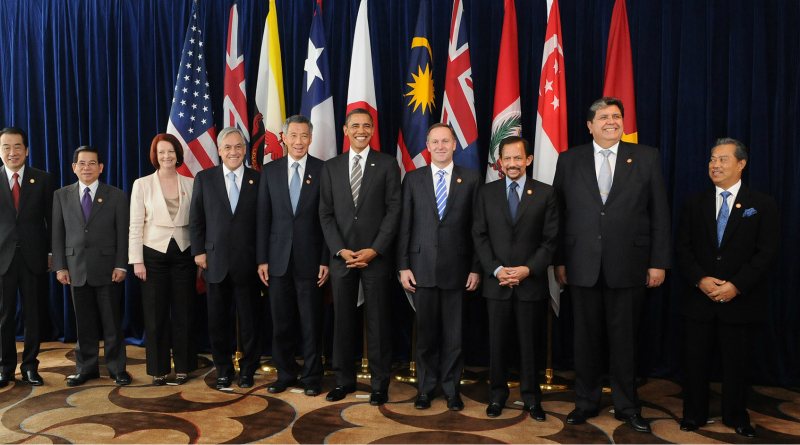
                          Leader of TPP Member States. From: Gobierno de Chile.


By Chandler Foust, Research Associate at the Council on Hemispheric Affairs 
 
On June 12, the U.S. House of Representatives passed Trade Promotion Authority (TPA) while rejecting Trade Adjustment Assistance (TAA). The Senate version of the bill, with TAA and TPA adjoined, passed. Typically, a bill such as TAA would have strong Democratic support because it provides assistance to individuals who lose jobs due to trade deals. However, since the bills were separate in the House and adjoined in the Senate, House Democrats voted it down to prevent TPA from being signed into law. Many Democrats opposed TPA because if signed into law, President Obama would have fast track authority to ratify the Trans-Pacific Partnership (TPP), which many Democrats are against. By rejecting TAA, House Democrats forced the Senate to separate the TAA from the TPA and vote on it again.

President Obama was then left to rely on Republican Senate Majority Leader Mitch McConnell and Republican Speaker of the House John Boehner to deliver the legislation, and they came through. On June 25, the Senate voted to pass TPA, without TAA, which means that the bill will be sent to the President.[1] With TPA sent to the president and the House of Representatives passing TAA the second time around, the Obama Administration can chalk this round up as a victory.[2] Regardless of what happens next though, the fact that the President’s own party initially abandoned him leads to a much-needed discussion on the role trade agreements play in determining policy in a democratic society.

July 7, 2015

Political Report # 1054 Robert Kennedy Jr.'s 25 Truths on the Secret Negotiations between Fidel Castro and President Kennedy By Salim Lamrani, Global Research


                                                      VRAEM, a region heavy with terrorism and poverty 

                                             (Photo: Andina/Cortesía)
More than half a century ago, Fidel Castro and John F. Kennedy conducted secret negotiations aimed at normalizing relations between the United States and Cuba. Robert Kennedy Jr., nephew of the assassinated President, recounts these events and praises Obama's policy of rapprochement, which is making his uncle's "dream" a "reality(1)".[1]

1. After the October 1962 missile crisis, a conflict that almost lead to a nuclear disaster, and its resolution that included the withdrawal of Soviet missiles from Cuba and US missiles from Turkey, President John F. Kennedy decided to undertake a process of normalization of relations with Cuba.

2. During his trip to the Soviet Union in 1962, Fidel Castro spoke at length with Nikita Khrushchev about Kennedy. According to the former president's nephew, "Castro returned to Cuba determined to find a path to reconciliation" with the United States.

July 6, 2015

Political Report # 1053 Puerto Rico - like Greece - will default on its debts, as the U.S. has ignored the island’s financial problems for decades By Juan Gonzalez, NY Daily News


                                    RICARDO ARDUENGO/AP

                           A local walks by closed San Juan bank, where posters say, 'Let rich pay for crisis.'


                           By Juan Gonzalez, NY Daily News
 
Obama to Puerto Rico: Drop Dead.

That was the message from the White House this week to 3.5 million U.S. citizens of Puerto Rico - our own version of Greece.