
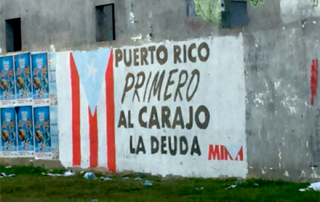
By Ed Morales, The Nation
|
Riding through the hills of Canóvanas last weekend with Prima, a vacationing 65-year-old Brooklynite who was born and raised in the Puerto Rican countryside, I got a brief lesson on the island's history and political economy. "This land was all cañaverales," she said, meaning rough acres of sugarcane, which has now been replaced by mile after mile of suburban tract housing. "When that ended, some people worked in factories and construction. Now, I don't know what's going to happen. I think the empire is collapsing."
Today that history has caught up with the island. Puerto Rico-an unincorporated territory of the United States with 3.5 million US citizen residents who do not have the right to vote for president or representation in Congress-is making headlines these days because of its inability to pay a $72 billion debt owed to holders of its devalued bonds, often issued through such entities as the infamous PREPA, the electrical power authority. The threat of default was signaled by Governor Alejandro García Padilla's admission last week to The New York Times that the debt was "not payable."
|
