Showing posts with label Caribbean. Show all posts

April 22, 2021

Blog Exclusive - On the threshold of a Latin American and Caribbean tie-breaker?

written by Félix Pablo Friggeri y Angélica Remache López

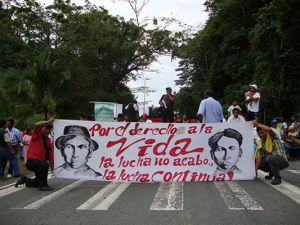
    The description of the regional situation and its integration process has gone through a series of conceptualizations with diverse political intentions. We propose a characterization based on the concept of “catastrophic tie,” seeking to highlight elements that may be studied prospectively, considering recent events. These include aspects of the electoral processes and popular demonstrations that have taken place in recent times. We raise the question of whether we are moving towards the possibility of a resumption of the predominance of popular governments and regional integration processes.

Regional catastrophic tie

    We understand that there are two mistakes in the interpretation of the Latin American-Caribbean regional reality, it is, therefore, important to overcome those in order to understand the current situation and generate an analysis that serves as the source of the political debate oriented to respond the popular needs and popular struggles of our region. 

    In the face of the relative predominance of popular governments in at least part of the first two decades of this century, the idea that we had entered a “post-neoliberal era” resonated throughout the continent. Some studies used this term, which had accurate elements of the analysis of reality, but its reading in the sense that the neoliberal conformation had been fundamentally overcome was not in line with what was predominating in the economic world and, in a good part, of the social imaginary of our countries.  Latin America and the Caribbean was the only region on the planet that, as such, formed a regional bloc to contestation to neoliberal hegemony. The neoliberal hegemony, however, continued to define the fundamentals of the economic dynamics and social imaginary, especially those related to socio-economic mobility. The predominance of popular governments represented a strong and relatively sustained challenge to the hegemony of global capital, but never its definitive defeat. Neoliberalism continued to define the fundamentals of labor relations, capital accumulation processes, the people-nature relationship and the rural and urban property system. This explains why popular governments achieved significant advances in income distribution but did not achieve a considerable modification in the distribution of wealth, which is what modifies the correlation of social forces (Schuldt 2013). The core of the explanation of the regional crisis in the face of emerging progressive governments with popular characteristics suffers, therefore, opens a way to a relative predominance of the forces of the neoliberal right.

    The second mistake was to understand the advance of the forces of wild capitalism as the “end of the populist cycle.” An interpretation clearly organized by the right, but which was accompanied by some versions of the intellectual left, generally conditioned by the economic view. The right-wing achieved a relative hegemony based on several coups d’état (Honduras 2009; Paraguay 2013; Brazil 2016; Bolivia 2019), on the pressure and encirclement of governments and peoples (Cuba and Venezuela), on some electoral processes that represented defeats for popular forces, but, above all and fundamentally, by multiple forms of u.s. interventionism. At the internal level, they played in favor of what Álvaro García Linera (2016) called “declassification” processes. Because of this process, part of the same population that benefited by the so-called “inclusion policies” of the popular governments ended up voting against them. This phenomenon has happened in several countries of the region and should be analyzed rigorously: people who were poor and who began to have access to some goods they had never had and who were identified -with more or less reason- as people who came out of poverty and began to be part of what was identified as “middle class,” adopted the discourse and political options of the bosses, stopped voting “as poor” and voted as “middle class” and adopted criteria against the working majorities to which they still belonged. This was a partial phenomenon, perhaps conjunctural, but it influenced the advance of the right wing in the popular spheres. This is what we would call the “mercantilization of social mobility.” Another mercantilizing process that collaborated in this “right-wing” of a part of the popular sectors was that of spirituality, driven, above all, by the so-called “Theology of Prosperity” that orients a good part of what is called the Neo-Pentecostal movement.

    We understand that the situation that has been developed in the region for several years may be described as a “catastrophic tie.” The political concept of “tie” arises from the work of Antonio Gramsci, but was developed, especially, by two Latin American authors to describe the conjunctural realities of their countries. One was the Argentine Juan Carlos Portantiero (2003) in the 1970s. He described the reality of his country as a “hegemonic tie” because the groups fighting for power were not strong enough to lead the country, but they did have the strength to veto opposing projects. The other approach, with which Álvaro García Linera (2008) described the reality of Bolivia, opted for the expression “catastrophic tie,” highlighting the existence of two political projects with the capacity to attract and mobilize social forces with an extended scope, but whose confrontation resulted in a “paralysis of the state command.” For him, the way out of this situation was the election of Evo Morales. This theoretical approach, which the authors use to describe the reality of their countries, can also be used to analyze the current regional situation.


On a regional tie-breaker?

    The victories of Andrés López Obrador in Mexico in 2018 and Alfredo Fernández in Argentina in 2019 were key to the advance of a change in the regional landscape. Both countries have a population and economic weight, behind Brazil, among the most important in the region. Their articulation, given in the Community of Latin American and Caribbean States (CELAC), in the Puebla Group and in joint actions among which the action to save the lives of Evo Morales, García Linera and other Bolivian officials at the time of the coup d'etat in that country, highlights the possibility of an “Argentina / Mexico Axis” that can promote policies different from the purely neoliberal ones and a resumption of the process of regional articulation.

August 16, 2017

Book Review, Toward an Understanding of Transnational Capitalism in the Caribbean

:::::: Book Review ::::::


Toward an Understanding of Transnational Capitalism in the Caribbean
by Jeb Sprague-Silgado 

Globalization, Sovereignty, and Citizenship in the Caribbean
Watson Hilbourne (ed.) Globalization, Sovereignty, and Citizenship in the Caribbean. Mona, JamaicaUniversity of the West Indies Press2015.

Hilbourne Watson, in Globalization, Sovereignty, and Citizenship in the Caribbean, lays out a nuanced and radical critique of today’s “commonsense” perceptions of the nation-state and associated statuses such as citizenship. By “radical” I mean, as in the Greek definition, “arising from or going to a root or source.” While other contributors to the volume lay out historically grounded arguments, Watson’s first, second, and concluding chapters stand out in challenging traditional nation-state-centric conceptions of political economy. Liberal universalized rights were supposed to promote a new fraternité, but the rights of citizens have developed through and concomitant with systems of exploitation and repression. As Watson argues, these rights were never meant to extend relative equality to the masses, as is often believed. Hannah Arendt (1966: 267, 298–301) famously made a similar point in her critique of the nation-state and in the context of the “rights of man.”


September 8, 2016

Free Limited Access, China's Relations with the Latin American and Caribbean Countries: A Peaceful Panda Bear instead of a Roaring Dragon


Get FREE online access to the article below!


China and Latin America: Processes and Paradoxes
(November 2015)


by Richard Harris


Abstract

English: The Western academic literature and media coverage of the increasing economic and political relations between the People's Republic of China (PRC or China) and the Latin American and Caribbean countries contains biases, fears, and misinformation about those relations. Closer examination reveals that Chinese trade, investment and loans have supported the left-leaning governments in the region that are attempting to develop alternative postcapitalist societies. China's leaders seek allies among the developing countries to join with them in creating a new multipolar and more equitable global order. The PRC has launched a new economic strategy that makes consumer demand the main engine of China's economic development. It seeks to boost productivity, reduce the country's growing income disparities, and pursue an environmentally sustainable path of economic development based on advanced high-value and clean manufacturing technologies and renewable sources of clean energy. The PRC's goal of developing a new ecological civilization will provide opportunities for the Latin American and Caribbean economies to export a more diversified basket of goods to China and attract Chinese investments and loans into new areas such as renewable energy.


September 1, 2016

Free Limited Access, China's Relations with the Latin American and Caribbean Countries: A Peaceful Panda Bear instead of a Roaring Dragon


Get FREE online access to the article below!


China and Latin America: Processes and Paradoxes
(November 2015)


by Richard Harris


Abstract

English: The Western academic literature and media coverage of the increasing economic and political relations between the People's Republic of China (PRC or China) and the Latin American and Caribbean countries contains biases, fears, and misinformation about those relations. Closer examination reveals that Chinese trade, investment and loans have supported the left-leaning governments in the region that are attempting to develop alternative postcapitalist societies. China's leaders seek allies among the developing countries to join with them in creating a new multipolar and more equitable global order. The PRC has launched a new economic strategy that makes consumer demand the main engine of China's economic development. It seeks to boost productivity, reduce the country's growing income disparities, and pursue an environmentally sustainable path of economic development based on advanced high-value and clean manufacturing technologies and renewable sources of clean energy. The PRC's goal of developing a new ecological civilization will provide opportunities for the Latin American and Caribbean economies to export a more diversified basket of goods to China and attract Chinese investments and loans into new areas such as renewable energy.


January 4, 2016

Abstract, China’s Relations with the Latin American and Caribbean Countries: A Peaceful Panda Bear instead of a Roaring Dragon by Richard L. Harris

:::::: Abstract ::::::


by Richard L. Harris

The Western academic literature and media coverage of the increasing economic and political relations between the People’s Republic of China (PRC or China) and the Latin American and Caribbean countries contains biases, fears, and misinformation about those relations. Closer examination reveals that Chinese trade, investment and loans have supported the left-leaning governments in the region that are attempting to develop alternative postcapitalist societies. China’s leaders seek allies among the developing countries to join with them in creating a new multipolar and more equitable global order. The PRC has launched a new economic strategy that makes consumer demand the main engine of China’s economic development. It seeks to boost productivity, reduce the country’s growing income disparities, and pursue an environmentally sustainable path of economic development based on advanced high-value and clean manufacturing technologies and renewable sources of clean energy. The PRC’s goal of developing a new ecological civilization will provide opportunities for the Latin American and Caribbean economies to export a more diversified basket of goods to China and attract Chinese investments and loans into new areas such as renewable energy.

December 18, 2015

Abstract, Understanding China’s Relations with the Latin American and Caribbean Countries: Research Notes by Richard L. Harris

:::::: Abstract ::::::


by Richard L. Harris

Since the formation of the People’s Republic of China (PRC) in 1949, its political leaders have been concerned with securing the country’s sovereignty, national unification, and territorial integrity as well as creating an international environment favorable to its peaceful development as a socialist society and to the development of a new multipolar world order based on peace and international cooperation rather than hegemony, extreme inequality, and war. In pursuit of these strategic goals, the PRC’s political leaders seek to foster long-term economic and political cooperation with the Latin American and Caribbean countries.

December 9, 2015

Abstract, China’s Relations with the Latin American and Caribbean Countries: A Peaceful Panda Bear instead of a Roaring Dragon by Richard L. Harris

:::::: Abstract ::::::


by Richard L. Harris

The Western academic literature and media coverage of the increasing economic and political relations between the People’s Republic of China (PRC or China) and the Latin American and Caribbean countries contains biases, fears, and misinformation about those relations. Closer examination reveals that Chinese trade, investment and loans have supported the left-leaning governments in the region that are attempting to develop alternative postcapitalist societies. China’s leaders seek allies among the developing countries to join with them in creating a new multipolar and more equitable global order. The PRC has launched a new economic strategy that makes consumer demand the main engine of China’s economic development. It seeks to boost productivity, reduce the country’s growing income disparities, and pursue an environmentally sustainable path of economic development based on advanced high-value and clean manufacturing technologies and renewable sources of clean energy. The PRC’s goal of developing a new ecological civilization will provide opportunities for the Latin American and Caribbean economies to export a more diversified basket of goods to China and attract Chinese investments and loans into new areas such as renewable energy.

November 20, 2015

Abstract, Understanding China’s Relations with the Latin American and Caribbean Countries: Research Notes by Richard L. Harris

:::::: Abstract ::::::


by Richard L. Harris

Since the formation of the People’s Republic of China (PRC) in 1949, its political leaders have been concerned with securing the country’s sovereignty, national unification, and territorial integrity as well as creating an international environment favorable to its peaceful development as a socialist society and to the development of a new multipolar world order based on peace and international cooperation rather than hegemony, extreme inequality, and war. In pursuit of these strategic goals, the PRC’s political leaders seek to foster long-term economic and political cooperation with the Latin American and Caribbean countries.

November 5, 2015

Film Review, Latin American Dreaming, A Neoliberal Vision for Retirement by Kristi M. Wilson and Tomás Crowder-Taraborrelli

Film Review:  Latin American Dreaming, A Neoliberal Vision for Retirement

by Kristi M. Wilson and Tomás Crowder-Taraborrelli
Anayansi Prado Paraíso for Sale. (United States/Panama, 2011)


Paraíso for Sale, directed by Anayansi Prado (also the director of Maid in America, 2005, and Children in No Man’s Land, 2008), treats the topic of Canadian and American retirees’ looking to stretch their dollars, buy second homes, and unwind in the sun by relocating (often permanently) to the Caribbean. It presents ample evidence of the looting of prime real estate in the Caribbean, where international corporations disembark with billions of dollars, pressure the locals to sell their land, and entice politicians not to enforce the law or, worse, to break it.

August 27, 2015

Film Review, Latin American Dreaming. A Neoliberal Vision for Retirement.

Film Review: Latin American Dreaming. A Neoliberal Vision for Retirement
by Kristi M. Wilson and Tomás Crowder-Taraborrelli
Anayansi Prado, Paraíso for Sale. United States/Panama, 2011

Paraíso for Sale, directed by Anayansi Prado (also the director of Maid in America, 2005, and Children in No Man’s Land, 2008), treats the topic of Canadian and American retirees’ looking to stretch their dollars, buy second homes, and unwind in the sun by relocating (often permanently) to the Caribbean.

August 24, 2015

Abstract: The Strategic Integration of Latin America: A Disputed Project, Article by Giuseppe Lo Brutto and Carlos Otto Vázquez Salazar

:::::: Abstract ::::::

Commentary
by Giuseppe Lo Brutto and Carlos Otto Vázquez Salazar

The integration of Latin America and the Caribbean is a disputed process. In the new phase of integration represented by the Alianza Bolivariana para los Pueblos de Nuestra América and the Unión de Naciones Suramericanas, the control of natural resources has acquired central importance in a global scenario characterized by hegemonic reconfiguration and a tendency toward the creation of a multipolar world. For the integration to be viable, it must overcome the extractivist model and establish new forms of state-society relations.

January 16, 2009

Fifty and Counting by Hobart A. Spalding

Fifty and Counting
Hobart A. Spalding

Hobart Spalding is Professor Emeritus of Latin American and Caribbean history at the City
University of New York. He has written or edited a half dozen books and more than 100 articles.
His most recent work about Cuba appears in Science and Society (72 [4], 2008) and in a special
issue of Socialism and Democracy scheduled for 2009.


In spring 1959 I walked across the bridge to Soldier’s Field in Cambridge along with several classmates at Harvard to hear Fidel Castro speak. Two years before I had visited Cuba as a preppy tourist curious about what I had read in Herbert Matthews’s columns in the New York Times about this romantic rebel and felt sure that Batista was a bad guy. My feeble attempts to contact
revolutionary people had failed dismally, but Fidel’s speech captured the justpre-1960s rebel inside of me. I have been a fan of the revolution ever since and have visited Cuba three times.

Cuba, like Vietnam, became a symbol of resistance against the Evil Empire (a.k.a. the U.S.A.) for the whole world. Ninety miles from Florida and representing everything that capitalism is not, it has shone like a beacon in the dark night. But, more important, it has become a laboratory for Third World attempts to break imperialist chains, and in that lessons abound. A huge divide exists among progressive people. There are those who have visited Cuba and who have lived in the Third World and those who have not. I often find that the “leftie” critics of Cuba (Maoies and Trotties) have never been there, and so they quote their favorite theorists and cite statistics without any experience at the grassroots level—big mistake. There is no way that one can really judge the Cuban Revolution without having been on the ground floor. Is Cuba a socialist society?No! Does it have an egalitarian framework? Yes! Unless you have walked among the people and talked to them one to one, there is no way to get a real feeling for what has taken place. Compare their way of living with that of the barriadas, quilombos, and villas miserias and then judge.

In comparison with people in the United States, even the less wealthy ones, Cubans have less buying power, less choice, and fewer of the basic necessities, but the average Cuban has better medical care and better access to education. No one in Cuba starves. Compare this with the food riots in a dozen countries across the globe, many of which are “economic miracles” according to capitalist pundits. Cubans also have a pride in their own society that others do not. They are very aware of both its accomplishments and its failures. In the United States most people think that they are to blame for not making it.

I think that the most important lessons that Cuba can teach us are these:  First, socialism in one country cannot exist. As long as imperialism stretches its tentacles around islands of progress, it will strangle efforts toward truly free societies. This argues that change must be global. Second, it is important to pass along the values to each generation. Unfortunately, at this time it seems that the U.S. media are gaining influence among Cuban youth. How much longer the old revolutionary ideals can stay the norm is a key question.

The Internet is real, and its lessons are no less false than those of other media but attract the young nevertheless. This is the challenge at the cultural level that the leadership faces. It is sometimes discouraging to hear about corruption, favoritism, and materialism among the leaders and bureaucrats inside Cuba, but that is one reality. At the same time, it is a very positive experience to go to a meeting of Poder Popular or some other grassroots group and feel the excitement and energy there. Which one will prevail in the end? Time will tell, but if one believes in equality one can only think that the human side, not the materialist one, will triumph.


LATIN AMERICAN PERSPECTIVES, Issue 164, Vol. 36 No. 1,
January 2009 132-133
DOI: 10.1177/0094582X08329179
© 2009 Latin American Perspectives