Showing posts with label oil. Show all posts

April 10, 2020

Political Report # 1439 Cuba faces squeeze on food production as US oil sanctions bite


Political Report # 1439

Cuba faces squeeze on food production as US oil sanctions bite


Oxen are replacing tractors as the island gets by on sharply reduced petroleum deliveries thanks to Trump-ordered measures.

Justo Rodríguez mashes through the mud, whipping the two oxen that guide his iron plough as it slowly carves a furrow in the dry soil.

In normal times Rodríguez, 60, uses a tractor to plough these fields. But for months, the farm where he works 12 miles east of Havana, hasn’t had any diesel.

“It’s something to cry about, but we find ways to laugh,” said Rodríguez, pulling a wet cigar from his mouth. “We Cubans are like that – even with a bullet in the neck we keep laughing.”

Cuba is short of oil. In an effort to strangle its most indefatigable and intimate communist foe, the US has since April sanctioned tanker companies delivering petroleum to Cuba from Venezuela, its closest ally.

Last September, with the island running on just 30% of petroleum deliveries, President Miguel Díaz-Canel announced emergency energy-saving measures. Diesel quotas in the countryside were slashed.

Just outside Havana, Misael Ponce, 43, manages a milk farm, which like many others embraced agro-ecology in the 1990s after the Soviet Union disintegrated and the island was left without imported animal feed, insecticides and fertilisers.

“It was a subsistence mechanism that we had to adopt,” said Ponce. All of the livestock’s fodder is grown on site to reduce dependency on the world outside. Oxen usually till half the soil (their manure is used as fertiliser), while a 67-year-old American tractor ploughs the rest.

But with the tractor out of action, the oxen now prepare the soil alone. Ponce thinks he can grow all the mulberry, king-grass and sugar cane he needs to feed the cows, and is confident he can hit his production target.

But he acknowledges his farmhands are now working much longer hours: “What you can do with a tractor in an hour, you do with an ox in a day.”

Others are less able to cope.

In the neighbouring province of Mayabeque, Leonardo Suárez’s tractor sits idle. He has no draught animals.

“Where, in today’s world, does agriculture function without petrol?” he asks rhetorically.

Normally Suárez, a former aviation engineer, cultivates black beans, but he says that is impossible at scale without tractors or animals, so now he is planting cabbage and lettuce by hand: “If this situation continues I’ll rent some oxen to plough a spot of land just for me and my family – because I’m not going to die of hunger!”

When the US embargo on Cuba was introduced in the 1960s the goal, according to the US Department of State, was to “bring about hunger, desperation, and overthrow of the government”. For six decades that goal has failed: Cuba is one of the only countries in Latin America to have all but eliminated hunger, according to the UN Food and Agriculture Organization.

Just outside Havana, Misael Ponce, 43, manages a milk farm, which like many others embraced agro-ecology in the 1990s after the Soviet Union disintegrated and the island was left without imported animal feed, insecticides and fertilisers.

“It was a subsistence mechanism that we had to adopt,” said Ponce. All of the livestock’s fodder is grown on site to reduce dependency on the world outside. Oxen usually till half the soil (their manure is used as fertiliser), while a 67-year-old American tractor ploughs the rest.

But with the tractor out of action, the oxen now prepare the soil alone. Ponce thinks he can grow all the mulberry, king-grass and sugar cane he needs to feed the cows, and is confident he can hit his production target.

But he acknowledges his farmhands are now working much longer hours: “What you can do with a tractor in an hour, you do with an ox in a day.”

Others are less able to cope.

In the neighbouring province of Mayabeque, Leonardo Suárez’s tractor sits idle. He has no draught animals.

“Where, in today’s world, does agriculture function without petrol?” he asks rhetorically.

Normally Suárez, a former aviation engineer, cultivates black beans, but he says that is impossible at scale without tractors or animals, so now he is planting cabbage and lettuce by hand: “If this situation continues I’ll rent some oxen to plough a spot of land just for me and my family – because I’m not going to die of hunger!”

When the US embargo on Cuba was introduced in the 1960s the goal, according to the US Department of State, was to “bring about hunger, desperation, and overthrow of the government”. For six decades that goal has failed: Cuba is one of the only countries in Latin America to have all but eliminated hunger, according to the UN Food and Agriculture Organization.

Over the past 12 months, the US has hit Cuba with the most potent sanctions in half a century. Dreams of a more prosperous future that followed the Obama administration’s rapprochement with the island seem a distant memory.

For now, essential foodstuffs are in stock at bodegas, and monthly rations of eggs, spam and chicken are arriving on time. But away from the lifeline planned economy, scarcity is increasing.

When rumours swirl that a consignment of hotdogs has arrived, day-long queues can form outside shopping malls.

In January the government cut cooking gas rations after the US sanctioned the state energy company which imports liquid petroleum gas.

In February, the minister for commerce, Betsy Díaz, told the population to brace for shortages of personal hygiene products due to “serious financial limitations”. Buying more fuel on the open market, she said, has forced the government to “choose between maintaining stable food supplies” and products for people’s cleanliness.

Toothpaste is out of stock throughout the east of the island. Soap was already in short supply before people could stock up – and the news that seven cases of coronavirus have been confirmed on the island has only heightened concerns that the sanctions may have mortal ramifications.

On a recent Saturday, plantains, cassava and muddy lettuces were stacked high at a market stall in Centro Havana. But black beans – which together with rice form the mainstay of the Cuban diet – have been out of stock all season.

“There’s been less fuel assigned to the lorries so we’ve had less stock coming in,” said one vendor who didn’t want to give his name for fear of reprisals.

Others remained defiant

“The crisis doesn’t affect me,” said Beatriz de la Caridad Domínguez, 23, at the same market stall. “If there’s no tomato, I eat plantain – I find a solution for everything.”


Original article can be found (here).
URL:      https://www.theguardian.com/world/2020/mar/18/cuba-food-production-us-oil-sanctions

March 28, 2019

Abstract, China and Venezuela: South-South Cooperation or Rearticulated Dependency?

:::::: Abstract ::::::


China and Venezuela: South-South Cooperation or Rearticulated Dependency?


by Emma Miriam Yin-Hang To, Rodrigo Acuña


China’s increased participation in the world market and its consequent demand for energy has contributed to exacerbating the vulnerability of many externally oriented resource-rich countries. As a consequence, since the early 2000s the relationship between China and Venezuela has gone far beyond trade to an “energy cooperation” model with joint ventures and development funds not only in oil but also in nonresource sectors of the Venezuelan economy. Despite massive increases in social expenditure, Latin American theorists arguing from a neo-dependency perspective have questioned the long-term benefits of this so-called cooperation. They have characterized the relationship as “neoextractivist” in reference to the historically dependent relationship between Latin America and countries in the Global North. Whether the relationship is seen as based on South-South cooperation or on rearticulated global political and economic inequalities depends on whether the focus is on the behavior of the Chinese state and Chinese companies or on bilateral agreements between the two states. Although politically the relationship is based on cooperation, economically it displays many of the structural problems that Venezuela has faced since the discovery of oil.


CONTINUE READING THE FULL ARTICLE HERE

SaveSave
SaveSave
SaveSave
SaveSave
SaveSave


SaveSave
SaveSave
SaveSave
SaveSave
SaveSave
SaveSave

October 8, 2018

Abstract, Environmentalism and the Globalization of the Oil Industry in Rio de Janeiro, Brazil

:::::: Abstract ::::::


Environmentalism and the Globalization of the Oil Industry in Rio de Janeiro, Brazil
by Maria Guadalupe Moog Rodrigues


The state of Rio de Janeiro has become a hub for oil and gas production and infrastructure since Brazil entered the global oil market in the 2000s. Observers have anticipated increasing tensions between environmental activists and oil companies. These predictions have not been fulfilled, despite increasing evidence of environmental degradation caused by oil production. What could be hindering environmental mobilization in defense of the environment and affected populations and against the unrestrained expansion of oil infrastructure in the state? A longitudinal case study of environmental activism in defense of the Guanabara Bay ecosystem suggests that answers must consider the combined effects of democratization, political and regulatory decentralization, and neoliberal reforms on socioenvironmental activism—specifically, its weakening as civil society organizations confront increasing burdens of participation in policy making, deeply fragmented institutional and regulatory frameworks for environmental governance, and the expansion of opportunities to engage in collaborative arrangements with corporations.


October 1, 2018

Political Report # 1371 Indigenous Communities Reject Oil Drilling in Block 10

Unknown assailants attacked Salomé Aranda’s home on May 13, hurling rocks at her house and threatening her family. Aranda is a Kichwa leader in the Ecuadorian Amazon and an outspoken critic of Italian oil giant ENI, which has operated in the region for 28 years and plans to expand drilling into new fields in the so-called “Block 10” oil concession.
There is nothing circumstantial about the attack against Aranda. She belongs to the Mujeres Amazónicas Defensoras De La Selva De Las Bases Frente Al Extractivismo (Women Defenders of the Amazon Rainforest Against Natural Resource Extraction collective), and was one of the representatives who met with Ecuadorian President Lenín Moreno on March 22 after ongoing protests against the new concession. In that meeting, Aranda highlighted the social and environmental impacts of the “Block 10” oil drilling concessions, located in the Amazon rainforest 160 miles southeast of the capital city Quito. Among other demands, she and her fellow environmental defenders called on the government to cancel resource concessions in the south-central Amazon to free Indigenous lands of oil, mining, logging, and other extractive industries.
Soon after the meeting, the Italian nonprofit organization A Sud confronted ENI at its annual shareholder meeting in Italy in early May over the lack of community consent for its drilling operations in Ecuador. Days later, Aranda’s home was attacked.

June 29, 2018

Political Report # 1352 Powerful New Yorkers Are Criminalizing Ecuadorians Seeking Relief From Chevron

Two powerful New Yorkers have been indispensable in protecting Chevron from having to pay $9.5 billion to clean up its massive oil contamination in the Amazon rainforest after an Ecuadorian court decision. The contamination was an intentional injustice that killed and injured thousands of Ecuadorians - many Indigenous people and many children.
The Ecuadorian lawsuit, first filed 25 years ago, continues to languish because Chevron refuses to pay damages while 200,000 pages of lawful evidence of contamination by Chevron and Texaco have been ignored in a New York court.
Chevron’s intent in this case always has been to turn the focus from its own wrong-doing to the criminalization and de-legitimization of the Ecuadorians and their legal system.
The brain behind this travesty of justice is Chevron, but the muscle is Judge Lewis A. Kaplan and Chevron’s attorney Randy Mastro. Together, the two New Yorkers have demonized, criticized and belittled the 30,000-plus Ecuadorians who have tried for decades to clean up their polluted rainforest.
Judge Kaplan was appointed by former President Bill Clinton and now serves as the senior judge of the United States District Court for the Southern District of New York. As for Mastro, Chevron hired him and his firm, Gibson Dunn, to rescue the oil giant from the Ecuadorian lawsuit. Mastro once worked at New York’s City Hall as a deputy mayor for his longtime pal Rudy Giuliani, who is now Trump’s personal lawyer.
Around the time an Ecuadorian court ruled against Chevron in 2011, the California-based company retaliated in Judge Kaplan’s courtroom by accusing the 47 Ecuadorian plaintiffs of fraud and bribery. Judge Kaplan heard the case and ruled in Chevron’s favor in 2014, even though no credible evidence of fraud and bribery has surfaced.

April 17, 2017

Political Report # 1245 Amazon rainforest's final frontier under threat from oil and soya

Celso Carlos has made a modest living for 10 years growing manioc and coconuts and rearing poultry on a few hectares of lowland in Brazil's northern Amazon.
But three years ago, out of the blue, Carlos was told by an Amapá state judge that he had to move because his land had been bought by a businessman living more than 1,500 miles away in São Paulo. Within months, fences had been put up, and Carlos and other assentados, or settlers, had been forced off their land.
Carlos's land - along with hundreds of thousands more hectares across Amapá state - is the new frontier of global agribusiness. It lies unused for now but will almost certainly be sold on and used for soya production. The ubiquitous crop, which is part of most western diets and feeds billions of animals, will most likely be shipped as animal feed to the UK from a new Amapá port.
Having swept through Brazil and much of Latin America, causing ecological and social devastation by displacing people, ripping up the savannah and driving forest destruction, soya is now poised to do the same in Amapá, Brazil's least developed and most forgotten state, says Sisto Hagro, a Catholic priest.
Hagro, who works with the Brazilian Pastoral Land Commission (CPT) to defend peasant farmers' rights, blames government corruption and greed for what he calls a massive land grab. The state, he says, is illegally redistributing land bestowed on it by the federal government and moving existing smallholders to promote large-scale agribusiness. It is then legitimising its actions by changing its laws, he claims.

June 29, 2016

Abstract, Oil and the Chávez Legacy by Daniel Hellinger

:::::: Abstract ::::::

Oil and the Chávez Legacy 
by Daniel Hillinger

In the final 15 years of the Punto Fijo era (1958–1998), as state institutions and socioeconomic conditions deteriorated, the executive class of Petróleos de Venezuela S.A. broke free from state control. In his 15 years as president of Venezuela, Hugo Chávez reasserted the state’s control over the company and reestablished a fiscal regime that brought the country enormous financial benefits. It is a legacy, however, that has an uncertain future.

June 3, 2016

Abstract, Oil and the Chávez Legacy by Daniel Hellinger

:::::: Abstract ::::::

Oil and the Chávez Legacy 
by Daniel Hillinger

In the final 15 years of the Punto Fijo era (1958–1998), as state institutions and socioeconomic conditions deteriorated, the executive class of Petróleos de Venezuela S.A. broke free from state control. In his 15 years as president of Venezuela, Hugo Chávez reasserted the state’s control over the company and reestablished a fiscal regime that brought the country enormous financial benefits. It is a legacy, however, that has an uncertain future.

May 4, 2016

Political Report # 1139 Drilling Towards Disaster: Ecuador's Aggressive Amazonian Oil Push


(Photo: AmazonWatch.org)


By Kevin Koenig, Amazon Watch


Last week, the Ecuadorian government announced that it had begun constructing the first of a planned 276 wells, ten drilling platforms, and multiple related pipelines and production facilities in the ITT (Ishpingo-Tambococha-Tiputini) oil field, known as Block 43, which overlaps Yasuní National Park in Ecuador's Amazon rainforest. Coupled with the recent signing of two new oil concessions on the southern border of Yasuní and plans to launch another oil lease auction for additional blocks in the country's southern Amazon in late 2016, the slated drilling frenzy is part of a larger, aggressive move for new oil exploration as the country faces daunting oil-backed loan payments to China, its largest creditor.

Yasuní National Park is widely considered one of the most biodiverse places on the planet. It has more species per hectare of trees, shrubs, insects, birds, amphibians, and mammals than anywhere else in the world. It was designated a UNESCO Biosphere Reserve in 1989, and it is home to the Tagaeri-Taromenane, Ecuador's last indigenous peoples living in voluntary isolation.

March 9, 2016

Abstract, The Yasuní-ITT Initiative: Toward New Imaginaries by Matthieu Le Quang

:::::: Abstract ::::::


The Yasuní-ITT Initiative: Toward New Imaginaries 
by Matthieu Le Quang

The Yasuní-ITT (Ishpingo-Tambococha-Tiputini) Initiative consisted of leaving the oil underground in a part of Yasuní National Park in the Ecuadorean Amazon, one of the most biodiverse regions in the world. The financial compensation was to be invested in renewable energy, protection of biodiversity, and conservation of 44 protected areas. This initiative proposed a change of imaginaries. One of its most important contributions was questioning the fundamental role of oil in our capitalist and productivist society. With this project, which was linked to the National Plan for Living Well, Ecuador was moving toward a post-petroleum-based society and the pursuit of better living standards through bio-knowledge.

February 1, 2016

Abstract, The Yasuní-ITT Initiative: Toward New Imaginaries by Matthieu Le Quang

:::::: Abstract ::::::


The Yasuní-ITT Initiative: Toward New Imaginaries 
by Matthieu Le Quang

The Yasuní-ITT (Ishpingo-Tambococha-Tiputini) Initiative consisted of leaving the oil underground in a part of Yasuní National Park in the Ecuadorean Amazon, one of the most biodiverse regions in the world. The financial compensation was to be invested in renewable energy, protection of biodiversity, and conservation of 44 protected areas. This initiative proposed a change of imaginaries. One of its most important contributions was questioning the fundamental role of oil in our capitalist and productivist society. With this project, which was linked to the National Plan for Living Well, Ecuador was moving toward a post-petroleum-based society and the pursuit of better living standards through bio-knowledge.

July 23, 2015

Political Report # 1060 Combatting Corruption for the Sake of the Economy: The Afflictions of Oil-Rich Latin America By Eliza Davis, Research Associate at COHA


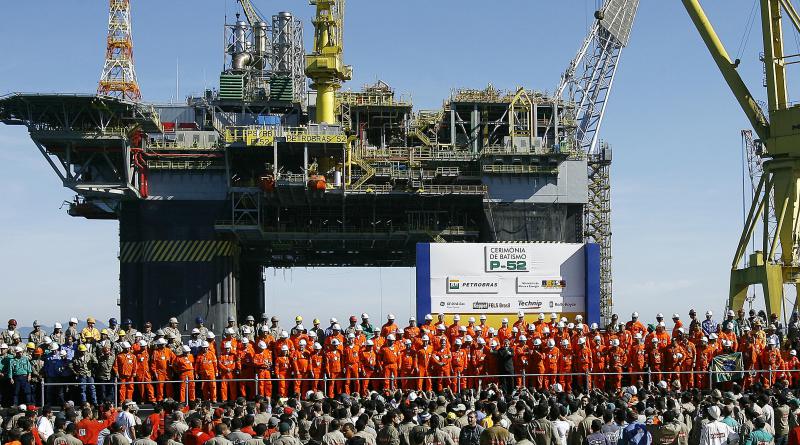
Featured Photo: Brazilian President Lula da Silva on the launch of the P-52 oil Platform From: Wikipedia


By Eliza Davis, Research Associate at COHA
 
On June 19, leaders of the two largest construction firms in Brazil, Marcelo Odebrecht of Odebrecht SA and Otávio Marquez Azevedo of Andrade Gutierrez, were arrested as part of an extensive corruption probe into the state-owned oil company Petrobras. Petrobras has been accused of various forms of malpractice including bribery and money laundering. While in the past, corruption in oil companies has led to blatant inaction-partly due to highly institutionalized venality-this probe has led to the indictment of over a hundred individuals affiliated with the company and has implicated dozens more. Bribes involving construction firms alone have totaled $2.1 billion USD[1] and the scandal has cost the company over $16 billion USD.[2] Accusations of corruption against Petrobras are emblematic of a larger problem across oil industries in the region, especially in Brazil, Mexico and Venezuela. Each new allegation seems to come with an increasingly dramatic loss of funds. Tackling corruption in an industry that has remained so crucial to the health of the Latin American economy is one method of helping to eliminate institutionalized corruption in other industries equally vital to economic success and to further augment political and economic credibility for the region.

Corruption is not uncommon in Latin America. Global Financial Integrity reported in December of 2014 that the average annual percentage of illicit outflows from Latin America is equivalent to 3.3 percent of Latin America's GDP. [3] Meanwhile, the Institute for International Finance (IIF) reported in February that annual GDP growth for all of Latin America in 2014 was only 0.4 percent and forecasted that growth for 2015 will only be 0.2 percent.[4] This means that the amount of money spent on corruption is over eight times that of region's annual growth.