Showing posts with label Miguel Salazar. Show all posts

December 11, 2015

Political Report #1098, Structural Problems Perpetuate Widespread Corruption in Paraguay By Miguel Salazar and Edwin Nieves, COHA


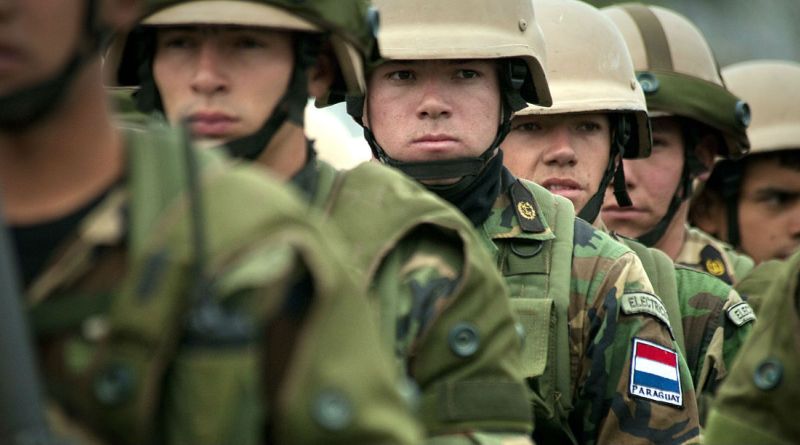
                             Featured Photo: “Paraguayan marines at Ancon Marine Base” (Brien Aho)
Since the end of the Stroessner dictatorship in 1989, Paraguay has struggled in its efforts to reform its weak institutional structures. Systemic corruption, growing poverty, and media censorship have all contributed to the perpetuation of the country’s stagnation over the years. Paraguay’s consistent failure to institute comprehensive land reform has even contributed to the rise of a local guerrilla movement that has not been neutralized by a corrupt military. While President Horacio Cartes has acknowledged the existence of corruption within the national police and military, many of Paraguay’s structural problems remain mercilessly neglected.

October 21, 2015

Political Report # 1082 Peace in Sight: Historic Agreement between Colombia and the FARC By Miguel Salazar, Research Associate at the COHA

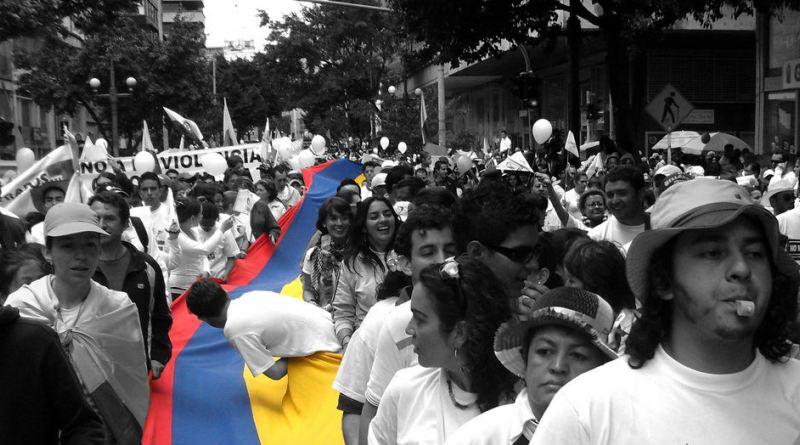
Featured Photo: Colombians protest for peace (2008). From: Marco Suárez


On Wednesday, September 23, 2015, Colombian President Juan Manuel Santos and FARC leader Rodrigo Londoño pledged to end the country's internal conflict by March 26, 2016.
Following La Violencia-Colombia's infamous civil war lasting from 1948 to 1958-the polarization of the country's political parties and ideological factions has led to a continuation of violence throughout Colombia. The left-wing Revolutionary Armed Forces of Colombia (Fuerzas Armadas Revolucionarias de Colombia, FARC) were initially formed as an armed peasant movement in 1964 that demanded comprehensive land and social reforms. Since then, the government and right-wing paramilitaries have waged a violent conflict against the FARC in rural Colombia that has resulted in a total of 220,000 deaths and over 5.7 million displacements.[1]