Showing posts with label Territory. Show all posts

July 27, 2016

Political Report # 1164 ree Puerto Rico


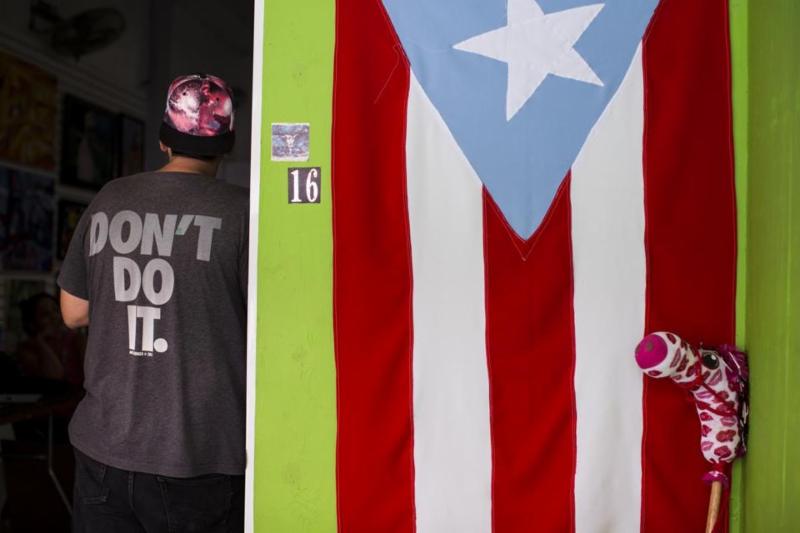
A Puerto Rican flag was draped outside a community gallery in Caguas, Ruerto Rico, on June 7. Puerto Ricans have been sharply divided over White House-backed legislation designed to reboot their economy.


By Stephen Kinzer, The Boston Globe


‘DO NOT MAKE peace until we get Porto Rico,” Theodore Roosevelt wrote in 1898 to Senator Henry Cabot Lodge, his closest friend and political partner. Lodge’s answer was reassuring: “Porto Rico is not forgotten and we mean to have it.”
A few weeks after that exchange, American troops landed in Puerto Rico, seized it, and proclaimed it part of the United States. The colonial experiment has not gone well. By most standards - health, education, per capita income, rates of violent crime - Puerto Rico compares poorly to even the most backward US states. Now it is broke.
Puerto Rico’s governor has restricted withdrawals from the government development bank and placed the highway authority in a “state of emergency” so creditors cannot seize its assets. Hundreds of businesses have closed. Schools lack electricity. Hospitals have reduced their services. The Zika virus is spreading and, according to the Centers for Disease Control and Prevention, may afflict one-fourth of the population by the end of this year. Planeloads of Puerto Ricans are emigrating each week, including many teachers and other professionals. The remaining population is older, poorer, and more in need of services the government cannot provide.

March 21, 2016

Abstract, "Development Models for the Brazilian Countryside: Paradigmatic and Territorial Disputes" by Bernardo Mançano Fernandes

:::::: Abstract ::::::

Development Models for the Brazilian Countryside: Paradigmatic and Territorial Disputes 
by Bernardo Mançano Fernandes

Problems of land use and ownership result from the inequalities caused by the hegemonic form of capitalism, agribusiness. A possible alternative model has yet to be worked out, and there is a fundamental need to reflect on the struggle against the hegemony of capitalism and how to safeguard the interests of the peasantry. From this perspective, the agrarian question should be considered as a conflict between those favoring the interests of the peasantry and family farming and those favoring agribusiness. A paradigmatic debate about the roles of the Brazilian state, agribusiness, and the peasant movements in formulating public policy shows that the potential for the peasantry to grow food is threatened by the concentration of power, landownership, capital, technology, and wealth. Unless there is a change in the development model, the prospect is increasing inequality. The experiment with having two government ministries for agriculture is an important step in the shaping of policies to support family farming.