The Fall of the Alberto Fujimori Government: New Evidence and Interpretations
Showing posts with label Luis Alberto Orellana. Show all posts
September 5, 2019
Abstract, The Fall of the Alberto Fujimori Government: New Evidence and Interpretations
:::::: Abstract ::::::
The Fall of the Alberto Fujimori Government: New Evidence and Interpretations
by Carlos Ugo Santander Joo and Carlos Federico Domínguez Avila
New evidence and interpretations regarding the end of the authoritarian Alberto Fujimori regime and the Peruvian democratic transition of 2000 suggest that preexisting electoral and institutional rules intrinsic to the authoritarian regime contributed to a process of regime change. Thus Peru can be seen as one of the few Latin American nations in which the transition was caused by a rupture in contrast to the pacted-reform/rupture transitions most common in the region.
The Fall of the Alberto Fujimori Government: New Evidence and Interpretations
June 20, 2016
Abstract, "Political Participation of Pentecostal Minorities in Chile, 1937–1989" by Miguel Ángel Mansilla and Luis Alberto Orellana
:::::: Abstract ::::::
Political Participation of Pentecostal Minorities in Chile, 1937–1989
by Miguel Ángel Mansilla and Luis Alberto Orellana
Chilean Pentecostals have been described as passive and politically conformist in their relations with the military government. Instead, there is historical evidence that they have been an active and interactive minority. Pentecostal denominations have participated in political projects associated with leftist political parties. Pentecostal leaders have associated themselves with various political parties as a form of political struggle for recognition, and active Pentecostal organizations resisted and protested during the military government.
May 30, 2016
Abstract, "Political Participation of Pentecostal Minorities in Chile, 1937–1989" by Miguel Ángel Mansilla and Luis Alberto Orellana
:::::: Abstract ::::::
Political Participation of Pentecostal Minorities in Chile, 1937–1989
by Miguel Ángel Mansilla and Luis Alberto Orellana
Chilean Pentecostals have been described as passive and politically conformist in their relations with the military government. Instead, there is historical evidence that they have been an active and interactive minority. Pentecostal denominations have participated in political projects associated with leftist political parties. Pentecostal leaders have associated themselves with various political parties as a form of political struggle for recognition, and active Pentecostal organizations resisted and protested during the military government.
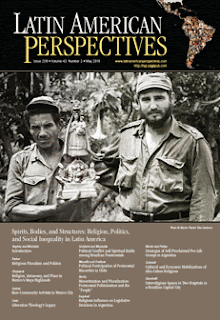
by Miguel Ángel Mansilla and Luis Alberto Orellana
Chilean Pentecostals have been described as passive and politically conformist in their relations with the military government. Instead, there is historical evidence that they have been an active and interactive minority. Pentecostal denominations have participated in political projects associated with leftist political parties. Pentecostal leaders have associated themselves with various political parties as a form of political struggle for recognition, and active Pentecostal organizations resisted and protested during the military government.
May 2, 2016
Abstract, "Political Participation of Pentecostal Minorities in Chile, 1937–1989" by Miguel Ángel Mansilla and Luis Alberto Orellana
:::::: Abstract ::::::
Political Participation of Pentecostal Minorities in Chile, 1937–1989
by Miguel Ángel Mansilla and Luis Alberto Orellana
Chilean Pentecostals have been described as passive and politically conformist in their relations with the military government. Instead, there is historical evidence that they have been an active and interactive minority. Pentecostal denominations have participated in political projects associated with leftist political parties. Pentecostal leaders have associated themselves with various political parties as a form of political struggle for recognition, and active Pentecostal organizations resisted and protested during the military government.
Subscribe to:
Posts (Atom)
